

Shandong Yulong welcomes you to visit our factory for inspection and business negotiations!
12/20/2025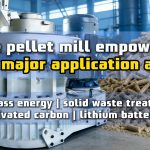
One pellet mill enables four major application areas, see if your industry is among them.
01/09/2026
Hello everyone, in the last video, we explained that some sludge contains organic matter and can be dewatered and made into pellets to realize economic value. This episode will begin introducing how to make pellets from sludge.
First, it’s important to know that untreated sludge has a high water content. To make pellets, its moisture content must be controlled between 10% and 15%. Therefore, we need to dewater the sludge first.
The sludge dewatering process typically involves three key steps: pretreatment, mechanical dewatering, and deep dewatering.
The first step, pretreatment, aims to change the sludge’s structure to make it easier to dewater. A common method is to add a flocculant, which is thoroughly mixed with the sludge. Then, most of the water is separated and removed through sedimentation or a thickener, leaving a paste-like sludge.
The second step, mechanical dewatering, involves feeding the sludge into a filter press or other dewatering equipment to squeeze out most of the water, creating a semi-solid structure.
The third step, deep drying, involves removing a large amount of water from the sludge, resulting in a semi-solid state. This can then be broken up using agitation or crushing equipment to produce granules or powder. The sludge is then sent to a dryer for further drying, controlling its moisture content to between 10% and 15%, meeting the moisture requirements for granulation.
For the drying section, Yulong provides rotary drum dryers, which offer high drying efficiency and large output. You can choose the appropriate model based on your needs.
After the above steps, the sludge moisture problem is solved. Next, granulation equipment can be used to produce pellets. Due to time constraints, this video will stop here. The next video will discuss how to design the granulation process. Stay tuned!


