
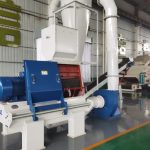
Importance of a Wood Chip Hammer Mill in Wood Processing
12/31/2024
Large Pellet Production Line Applications: From Energy to Animal Feed
01/03/2025
Rice husks pile up after rice processing and create disposal challenges. They are often treated as waste material. A rice husk pellet production line offers a solution to turn this waste into a useful product. Here’s how it contributes to waste management.
1. Reduces Agricultural Waste
Rice husks are treated as agricultural waste. Rice husk pellet production lines process this waste. They convert it into pellets, reducing the amount of waste left behind. The rice husk pellet machine is designed to compress risk husks. The process involves grinding and pelletizing the rice husks into uniform-sized pellets.
2. Promotes Recycling
Instead of dumping or burning rice husks, they can be recycled. The machine gives them a new purpose as biomass fuel. As rice is one of the major food crops, rice husk resources are abundant. Using rice husk as raw material can reduce the generation of waste and convert it into energy products. The use of rice husks as a raw material reduces the dependence on forest resources, thus promoting biodiversity.
3. Prevents Pollution
Burning rice husks causes air pollution. And disposing of rice husks improperly can clog waterways. An easy way to avoid such problems is to repurpose the husks with the help of rice husk pellet production line.
4. Supports Sustainable Energy
The pellets made from rice husks can replace fossil fuels. They are a sustainable energy source promoting clean energy. Rice husk pellets burn more cleanly. When burned, rice husks leave 15-16% ash, but after being made into pellets, the ash content is reduced to only about 6-7%.
5. Creates Economic Value
Rice husks, once seen as agricultural waste, become valuable when turned into pellets. The pellets can be used as fuel for heating systems. This helps create additional income sources for farmers and businesses. The rice husk pellet production line has brought economic benefits to farmers by transforming agricultural waste into treasure.
6. Helps with Storage and Transport
Loose rice husks can be hard to handle and store. Pellets in contrast are compact and easy to handle. Rice husk pellets have a density of about 5 times that of their loose form. This reduces logistical challenges for mass transportation and storage.
7. Easy to Use
Due to compact size, rice husk pellets are easy to use in burning devices. It is also cleaner than other fuels with low smoke and dust emissions. Additionally, creating rice husk pellets doesn’t require much cost, it is an efficient way to deal with rice husk.
Conclusion
Rice husk pellet production lines emerge as a smart waste management solution. They reduce agricultural waste, prevent pollution, and promote recycling. By turning rice husks into pellets, the machines help the environment and create economic value.
Shandong Yulong Machine Co., Ltd. is a leading rice husk pellet production line manufacturer, providing high-quality equipment at affordable prices. Our machine can suppress various types of rice husk efficiently with stable operations.


